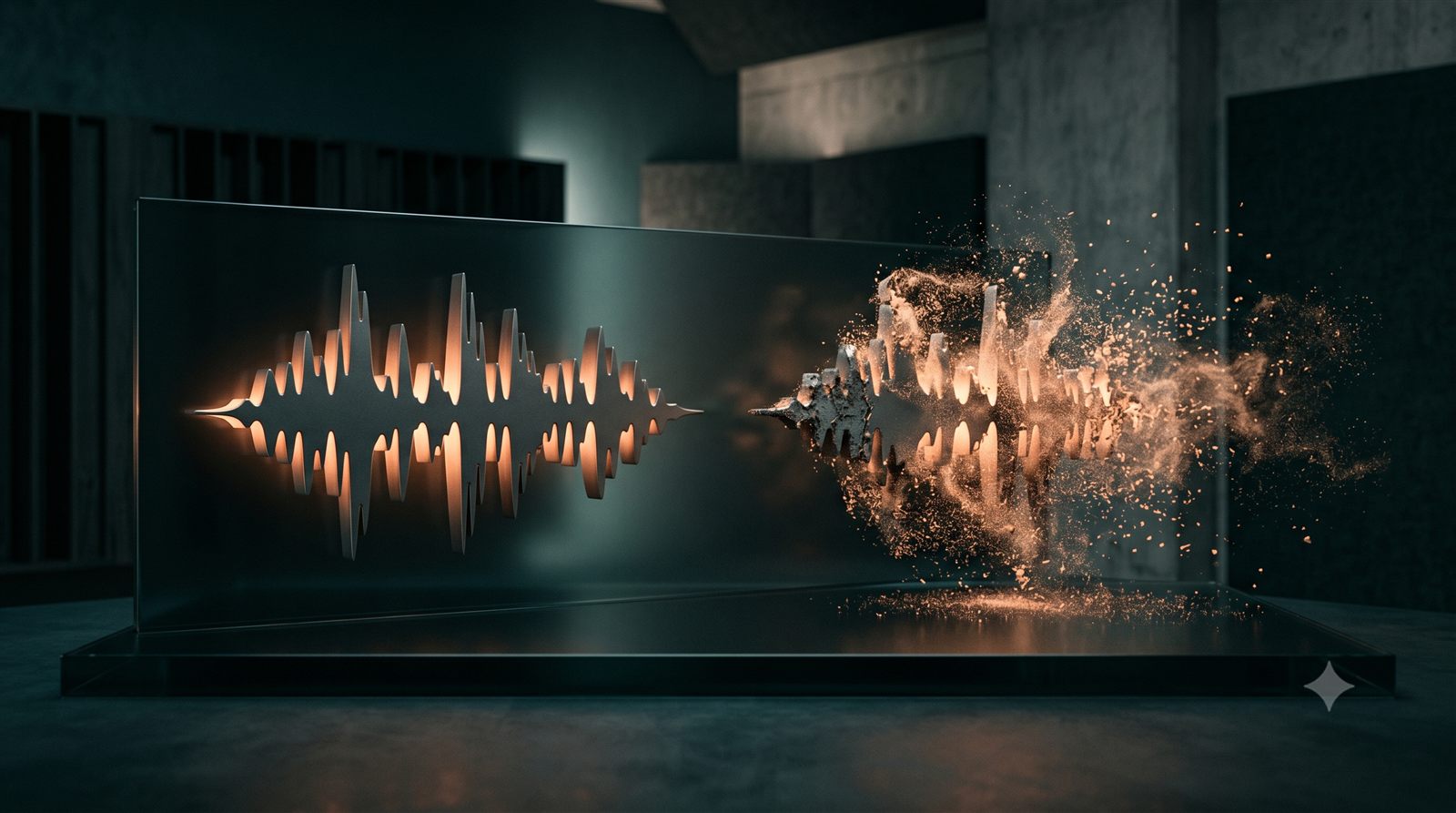
Voice Deepfakes and Vishing: When the Caller Pretending to Be Your Patient Is Neither
Vishing grew 442% in 2024 and deepfake voice attempts surged 1,633% in early 2025. Here is how voice cloning targets practice phone lines, and the verification architecture designed to stop an impersonated patient.
Ed
cybersecurity, agentic-ai-security, vishing, voice-deepfake, social-engineering, patient-privacy
Three seconds. That is roughly how much recorded audio current voice-cloning tools need to produce a convincing replica of a person's voice. A patient's voicemail greeting is longer than that. So is the testimonial video on your website, and the Instagram reel your best client posted from your treatment room.
The Thinking Robot installs Revenue Recovery Infrastructure for premium practices, engineered as Lifelike Automations — which means we spend a great deal of time thinking about voices on phone lines, including the dishonest ones. This is the calm version of a topic that usually arrives wrapped in alarm: what voice impersonation actually looks like at a practice's front desk, and what verification architecture does about it.
The Numbers, Without the Sirens
Vishing — voice phishing, fraud conducted by phone — stopped being a niche technique. CrowdStrike documented 442 percent growth in vishing attacks from the first to the second half of 2024. Deepfake-assisted vishing then surged 1,633 percent in the first quarter of 2025 versus the prior quarter. Pindrop's contact-center data shows deepfake fraud attempts rising 1,300 percent year over year — from roughly one a month to seven a day at monitored centers. By Gartner's September 2025 survey, 62 percent of organizations had experienced a deepfake attack within the prior twelve months.
The losses follow. FBI Internet Crime Complaint Center data, as reported by AARP, attributed about $893 million in 2025 losses to AI-related scams, including voice cloning used for "family in distress" calls. None of this requires a sophisticated adversary; it requires consumer-grade tools and a target who trusts a familiar voice.
Why a Practice Phone Line Is a Target
A premium practice's front desk holds three things a fraudster wants: identity data (names, birthdates, addresses harvested for broader identity theft), financial leverage (refund requests, deposit redirections, package transfers), and schedule intelligence (when a high-net-worth patient will be away from home, alone, or post-procedure). The classic plays:
The impersonated patient. A cloned or simply confident voice "confirms their details" — actually extracting them — or redirects a refund to a new card.
The impersonated provider. A caller claiming to be the physician's office, a pharmacy, or a referring practice asks staff to read back patient information for "coordination of care."
The impersonated owner. The after-hours call to a junior coordinator: "It's Dr. Reyes, I need the gateway login, I'm locked out." Urgency plus authority plus a familiar voice is the entire mechanism.
Notice that the deepfake is optional in two of three. Voice cloning did not invent phone fraud; it removed the last tell that protected busy, well-meaning staff — the voice not sounding right.
Why "Train the Staff Harder" Is Not the Whole Answer
Awareness training matters and we endorse it. But research on cloned audio keeps reaching the same finding: average listeners can no longer reliably distinguish a cloned voice from a real one. Asking your coordinator to out-listen a generative model is asking her to win a contest the technology was built to make unwinnable. The defensible posture treats every voice as unverified until process proves otherwise — which is, quietly, an argument for process rather than vigilance.
The Verification Architecture That Holds
Here is the structural irony: a disciplined automation is harder to socially engineer than a tired human, because it is engineered to resist being flattered, rushed, or intimidated. A properly built voice agent is designed to enforce the same rules at 2 p.m. and 2 a.m., on the first call and the four-hundredth. In our deployments — standard builds on a 4-layer safety stack, healthcare builds on a 6-layer stack — that looks like:
Verification before disclosure. The agent is configured not to read back appointment details, balances, or personal information until the caller passes identity checks. A perfect voice clone with wrong verifiers gets a polite dead end.
Callback-to-record discipline. Sensitive changes — refunds, contact updates, record requests — are confirmed by calling the number already on file, not the number that just called in. This single rule blunts many impersonation plays.
No privileged actions by voice request. The agent is designed so that it lacks the permissions to email records, share credentials, or move money, so authority claims have nothing to unlock.
Full call logging. Every attempt — including the failed ones — is recorded and reviewable, so a probing campaign against your practice is visible as a pattern, not a series of forgotten odd calls.
This is amplification, not replacement: the automation absorbs the adversarial traffic and the verification grunt work, and your human team handles the relationships — with a documented process behind them when a caller pushes. It is the same compliance-first worldview that anchors our medical deployments and the reason Nova, which runs our compliance workflow (audit trail and consent records), treats caller verification as the first job of intake rather than an interruption to it.
The caller pretending to be your patient may be neither a patient nor, strictly speaking, a person. Your front desk should not need to guess. It should have a structured intake protocol where guessing was never part of the design.
References
DeepStrike, "Vishing Statistics 2025: AI Deepfakes and the $40B Voice Scam Surge" (CrowdStrike 442% figure; Q1 2025 deepfake-vishing surge) — deepstrike.io/blog/vishing-statistics-2025 (2025)
Keepnet Labs, "Deepfake Statistics 2026" (Pindrop contact-center data; Gartner September 2025 survey) — keepnetlabs.com/blog/deepfake-statistics-and-trends (2026)
FBI / AARP reporting on IC3 2025 annual data ($893M in AI-related scam losses) — aarp.org/money/scams-fraud/fbi-ftc-report-2025-losses (2026)
FBI IC3 PSA, "Senior U.S. Officials Continue to Be Impersonated in Malicious Messaging Campaign" — ic3.gov/PSA/2025/PSA251219 (2025)
Next Step
If your premium practice runs more than 100 inbound consult inquiries a month and has no structured measurement of how many never reach a scheduled consultation, your pipeline may be leaking revenue you cannot see. The Line Audit shows you what actually happens: we call your line at the hours you're least likely to answer and send you the recordings with a written breakdown.
Audit Real-Time Conversational Velocity: Talk to Rosey, our AI receptionist, at +1 (720) 776-1664 (an AI demo line; calls are recorded).