Why After-Hours Calls Are Often Your MedSpa's Largest Revenue Leak
The high-value MedSpa caller researches at 9 p.m. on a Sunday. If your phone goes to voicemail, you've already lost them. Here's how after-hours coverage is designed to book consults while you're closed.
Ed
MedSpa, Pillar 1 — Zero-Miss Intake, After-Hours
Updated October 2026.
General information for practice owners, not medical, legal or tax advice.
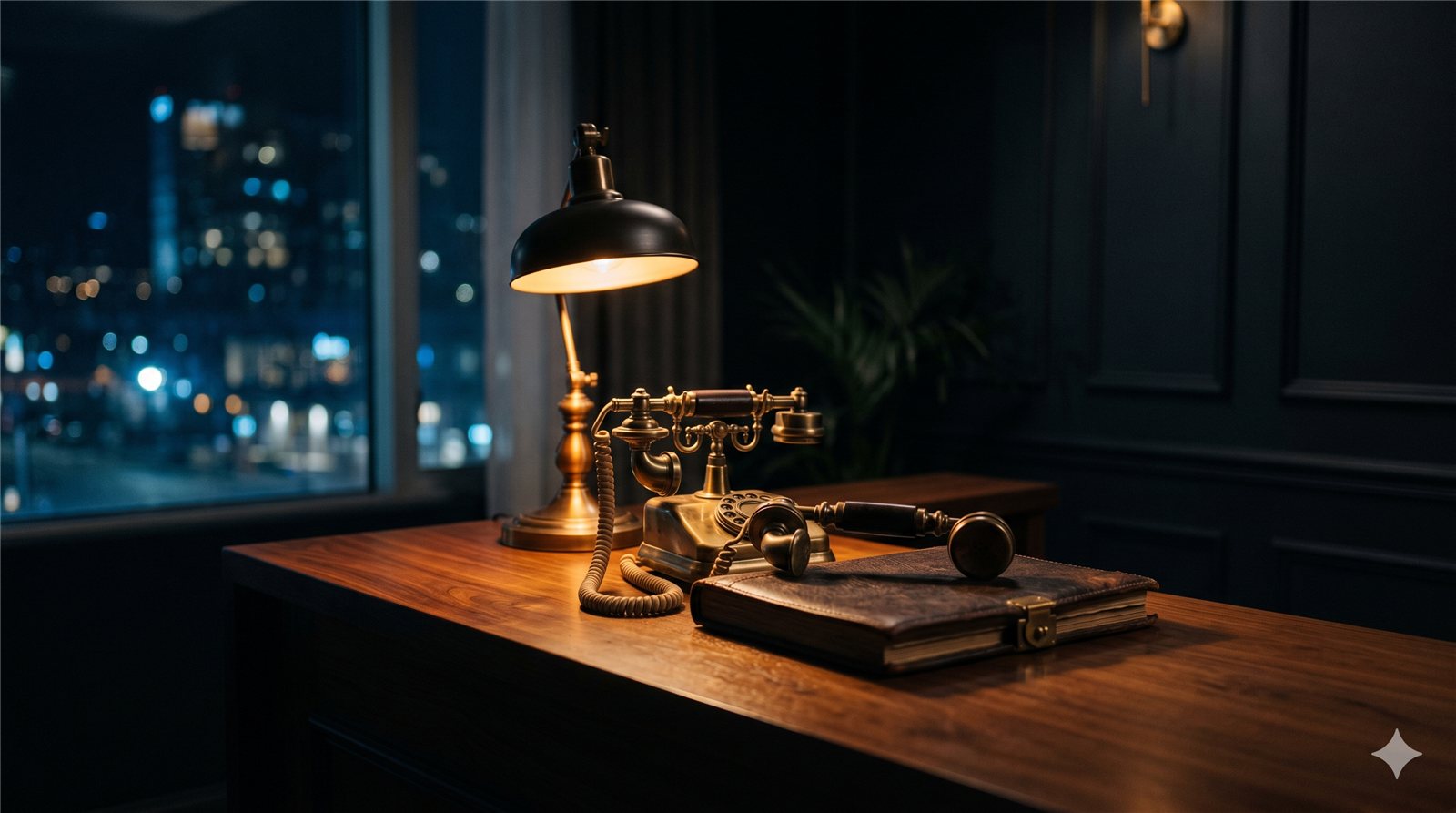
A premium MedSpa's highest-intent caller isn't ringing at 11 a.m. on a Tuesday. She's researching Sculptra options at 9 p.m. on a Sunday, comparing two clinics on her laptop while her kids are finally asleep. She picks up the phone, dials your number, and hears "our office is currently closed." She hangs up. By 9:04 p.m. she's on your competitor's online booking page.
That's the after-hours leak. It's quiet, it's invisible in your dashboard, and at a premium-ticket practice it can be one of the largest line items your competitor is absorbing. It is the exact failure point addressed by cosmetic consult intake protocols.
How Much After-Hours Volume Are We Actually Talking About?
Roughly 18% of salon and MedSpa calls land outside business hours [1]. One call-statistics roundup reports that 85% of callers who reach voicemail never call back and 62% go directly to a competitor [2]. In an illustrative model, a practice running 320 calls a month sees about 58 of them after hours. Run that against a $650 average ticket (squarely inside the $400 to $3,000 range a premium MedSpa treatment or package commands) and a 40% phone-to-consult conversion rate, and the after-hours leak alone comes to about $15,000 a month. Annualized: roughly $180,000 that, in this model, goes to whichever competitor picks up because your front desk went home at six.
Illustrative model built from published industry benchmarks, not a TTR client result and not a guarantee. Your figures will differ.
The honest read: after-hours isn't a fringe segment. It's where the high-intent, self-directed, high-ticket caller lives. They're already in the consideration phase. They've already decided to spend. Whoever answers the call is best placed to book the appointment.
Why "Hiring A Night Receptionist" Doesn't Solve It
The instinctive response is to staff the phone after hours. That solves the surface problem and creates four new ones:
After-hours call volume is sporadic. A coordinator paid to sit on the line through a quiet Tuesday evening burns margin. A coordinator missing in the middle of a busy Saturday night burns revenue.
Night-shift labor is expensive, hard to retain, and tough to deploy at premium-practice quality standards.
A single human can hold one conversation at a time. When two prospects call simultaneously at 9:15 p.m. on Sunday, you still lose one.
HIPAA compliance over after-hours human handling adds operational overhead that doesn't scale.
The cost stack on after-hours human coverage rarely pencils out.
What Does An After-Hours Zero-Miss Intake Look Like In Practice?
Rosey, our AI front-desk intake assistant (not a clinician), is built to answer inbound calls within seconds, around the clock, with escalation to your team when needed, and opens every call by saying she is an AI assistant and that the call is recorded. She captures the caller's details and questions against your real protocols, reads your live calendar, books the consultation, sends your practice's deposit link, and triggers an SMS confirmation (if the caller agrees to texts); clinical and eligibility decisions stay with your practice's human team. She does not replace your daytime coordinators: she extends the front line into the hours they cannot cover and frees them for the high-value face-to-face conversions during the day. The caller gets the same live response at 9 p.m. as at 11 a.m., after a clear disclosure that they're speaking with the practice's AI assistant. This is the first of TTR's Four Pillars.
What The After-Hours Module Is Engineered To Do
A representative premium MedSpa, modeled as an illustrative example (not a specific client result): 320 inbound calls monthly, 18% after hours, a 35% miss rate overall and close to a 100% miss rate after 6 p.m. With after-hours coverage, those calls are answered, the caller's details are captured, and the call is either booked against the calendar or routed for morning follow-up, so the window that used to produce nothing gets worked.
In an illustrative model — not a guaranteed result — the after-hours window alone is the first place to look when weighing the cost of the infrastructure; actual results vary by practice.
Is After-Hours AI Coverage Actually HIPAA-Compliant?
It can be, when it's installed correctly and your practice's own policies are in place. Deployed under a signed Business Associate Agreement for HIPAA-covered practices. PHI is encrypted in transit (TLS 1.2+) and at rest (AES-256), and access is audit-logged. Every vendor that handles PHI must sign its own BAA before any PHI reaches it. HIPAA compliance is shared between your practice and TTR. Patient calls are never used in identifiable form to train AI models. Our AI vendors are contractually barred from training on your data, and any tuning of our own system uses de-identified data only, under the BAA. The same HIPAA safeguards that govern a human coordinator handling PHI apply to the Lifelike Automation on the line [3], with audit records your medical director can request.
Reputation, Not Just Revenue
There's a secondary cost the spreadsheet doesn't capture. When a high-intent prospect calls and gets "we're closed," she infers something about how the practice runs. The premium operator's brand equity is partly built on accessibility, responsiveness, white-glove handling. A voicemail box at 9 p.m. on Sunday contradicts that. It tells your highest-value caller you're optional.
What This Is Not
This is not an after-hours upgrade tier on top of a phone system. It's not a "voicemail with better hold music." It's not a chatbot. It's the same Lifelike Automation that runs your in-hours front line, simply available continuously — because the demand is continuous and the leak is largest where you weren't looking.
References
[1] Hyperleap AI. "Why Salons and Medspas Lose Clients to Missed Calls During Appointments." 2025. https://hyperleap.ai/blog/salons-medspas-lose-clients-missed-calls
[2] Aira. "62% of Business Calls Go Unanswered: The $126K Cost." 2025. https://www.getaira.io/blog/missed-business-calls-statistics
[3] HIPAA Journal. "HIPAA Business Associate Agreement — 2026 Update." 2026. https://www.hipaajournal.com/hipaa-business-associate-agreement/
Zero-Miss Intake is the name of a design goal, not a guarantee that every call will be answered.
Next Step
If your premium practice runs more than 100 inbound consult inquiries a month and has no structured measurement of how many never reach a scheduled consultation, your pipeline may be leaking revenue you cannot see. The Line Audit shows you what actually happens: we call your line at the hours you're least likely to answer and send you the recordings with a written breakdown.
Audit Real-Time Conversational Velocity: Talk to Rosey, our AI receptionist, at +1 (720) 776-1664 (an AI demo line; calls are recorded).