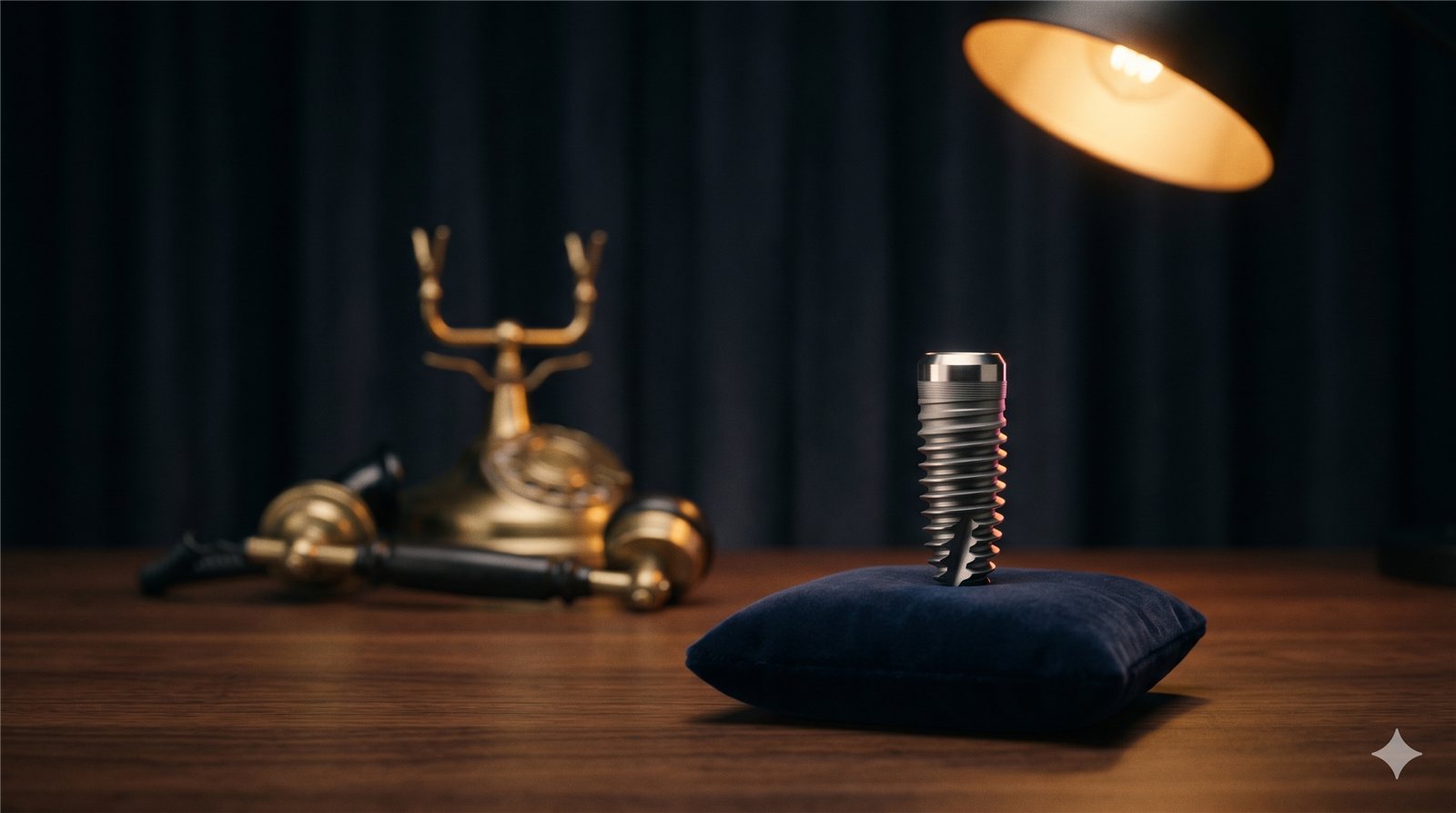
The $50K Phone Call: How Dental Implant Practices Are Losing High-Ticket Cases To Voicemail
Dental implant clinics miss roughly one in three calls. At $24K-$38K per arch, the leak is catastrophic. Here's the math and the Zero-Miss Intake fix.
Ed
Dental Implants, Zero-Miss Intake, Revenue Recovery, High-Ticket Practice[1] Verse.ai. "25 Eye-Opening Speed to Lead Statistics: Why Response Time Matters." Aggregating MIT Lead Response Management research by Dr. James Oldroyd (via InsideSales) and Harvard Business Review's 2011 analysis of 2.24M leads. https://verse.ai/blog/speed-to-lead-statistics
If you run a dental implant practice, your economics are not the economics of a general dentist. You are not winning a volume game. You are winning a high-ticket conversion game — and you are probably losing it on the phone.
A single full-arch All-on-4 case prices between $24,000 and $32,000 per arch in the United States, with full-mouth restorations reaching $40,000 to $60,000 [1]. Now consider that the average medical practice misses around 34% of inbound calls [2], and dental practices specifically run in the same range. The math is brutal, and most practice owners do not see it until somebody draws it on a whiteboard. The structural fix is Zero-Miss Intake infrastructure.
What Does A Single Missed Call Cost A High-Ticket Implant Clinic?
A missed call to an implant clinic is not a $150 hygiene appointment walking out the door. It is potentially a $50,000 full-arch case. Even at a conservative 30% consult-to-case conversion rate, missing two qualified implant inquiries per month bleeds roughly $360,000 a year in lost surgical revenue.
The patient calling about implants is the most motivated, most anxious, most pre-researched caller in your funnel. They have already spent six weeks on r/dentistry, scrolled through your before-and-after gallery, talked it through with their spouse, and finally — at 7:42 p.m. on a Tuesday — picked up the phone. If they get voicemail, 62% of patients hang up without leaving a message [3]. They click back to the search results and call the next prosthodontist. That is the call your competitor just booked. The same front-door dynamics drive cosmetic consult intake protocols for high-ticket aesthetic cases.
Why The Front Desk Cannot Fix This
The reflex is to hire another receptionist. It does not work. A human receptionist holds one conversation at a time, takes a lunch break, gets sick, and burns out. During the Monday morning rush, three lines are ringing while a patient stands at the desk asking for a printout. No human can run that scenario flawlessly at scale. This is structural impossibility, not a personnel problem.
The other reflex is to route overflow to an answering service. Answering services take a name and a number and promise a callback. They do not book the consult against your live surgical calendar. They do not capture the case details. They do not collect a deposit. By the time your team calls back the next morning, the prospect has booked elsewhere.
What A Zero-Miss Intake System Actually Does For Implants
Zero-Miss Intake is the first of TTR's Four Pillars. For an implant clinic, it is the one that pencils out fastest.
The Thinking Robot installs Revenue Recovery Infrastructure engineered as Lifelike Automations. On the implant front line, that means Rosey — the front-desk Revenue Specialist on the TTR Squad — answers every inbound call within two rings. She speaks naturally. She knows your protocols (All-on-4 vs. All-on-6, sedation options, financing partners, healing timelines). She reads your live calendar. She gathers the prospect’s case details, books the consult, and triggers the deposit step against your scheduling system — candidacy and clinical decisions stay with your surgical team. After hours, weekends, the gap between hygienists, the 7:42 p.m. Tuesday call — all of it gets captured.
It is HIPAA-Compliant end-to-end, BAA in place across the deployment stack, audit logs running on every conversation. The compliance posture is part of the install, not a sales-deck claim.
What This Is Not
This is not a chatbot. It is not a voice menu. It is not a smarter voicemail. It is not a rented SaaS bot sounding identical to the practice across town. A Lifelike Automation is built bespoke for your clinic — trained on your case mix, your surgeons, your financing, your aftercare protocols — and deployed inside your existing stack with full integration into your scheduling system.
It is also not a replacement for your team. It is an auxiliary pipeline-security layer. Your front desk stops apologizing for missed calls and starts running the in-chair experience that closes the case once the prospect is in the building.
What Changes On The Other Side
Here is what a Zero-Miss Intake install is built to change at an implant clinic:
Every inbound call answered live, inside two rings, around the clock
- After-hours and weekend revenue (historically zero) becomes a measurable line item
- High-intent callers — the 7 p.m. and Saturday researchers — get a live conversation instead of a voicemail
- Consult-to-case conversion lifts because the prospect was booked the moment they were ready, not 14 hours later
You did not spend years building a surgical practice to lose $50,000 cases to a busy signal. Treat the front line of the phone like the high-ticket revenue infrastructure it actually is.
References
[1] St. Lucie Center for Cosmetic Dentistry. "All-on-4 Dental Implants: Complete Pricing Guide 2025." 2025. https://www.stluciedentist.com/blog/all-on-4-dental-implants-complete-pricing-guide-2025/
[2] Neuwark. "The $200 Problem: How Missed Patient Calls Cost Medical Practice Revenue." 2025. https://neuwark.com/blog/missed-patient-calls-cost-medical-practice-revenue
[3] Patient10x. "The $500,000 Problem: How Missed Calls Are Destroying Medical Practice Revenue in 2025." 2025. https://www.patient10x.com/content-hub/the-500-000-problem-how-missed-calls-are-destroying-medical-practice-revenue-in-2025
Next Step
If your premium practice runs more than 100 inbound consult inquiries a month and has no structured measurement of how many never reach a scheduled consultation, your pipeline is leaking revenue. We quantify this for your practice in a 30-minute Intake Leak Audit.
Request an Intake Leak Audit: zeno@thethinkingrobot.com
Audit Real-Time Conversational Velocity: Talk to Rosey, our AI receptionist, at +1 (720) 776-1664.